




Trust Wallet Needed More Supported Chains From Its Provider. Ankr Delivered.

July 16, 2026
3 min read
Most RPC providers, Ankr included, support the same popular chains. Ethereum, Solana, BNB, a handful of L2s. This is the multi-chain stack, and for many use cases, it's enough.
Until you're building on something else.
Tron processes more daily transactions than chains that dominate every conference keynote. It moves more USDT globally than networks with three times the media buzz. And it's been underserved by enterprise infrastructure for years, either ignored outright or treated as a box to check by providers who never bothered to build for it properly.
Trust Wallet wasn't willing to accept that. So they went with Ankr.
Trust Wallet's Tron Infrastructure
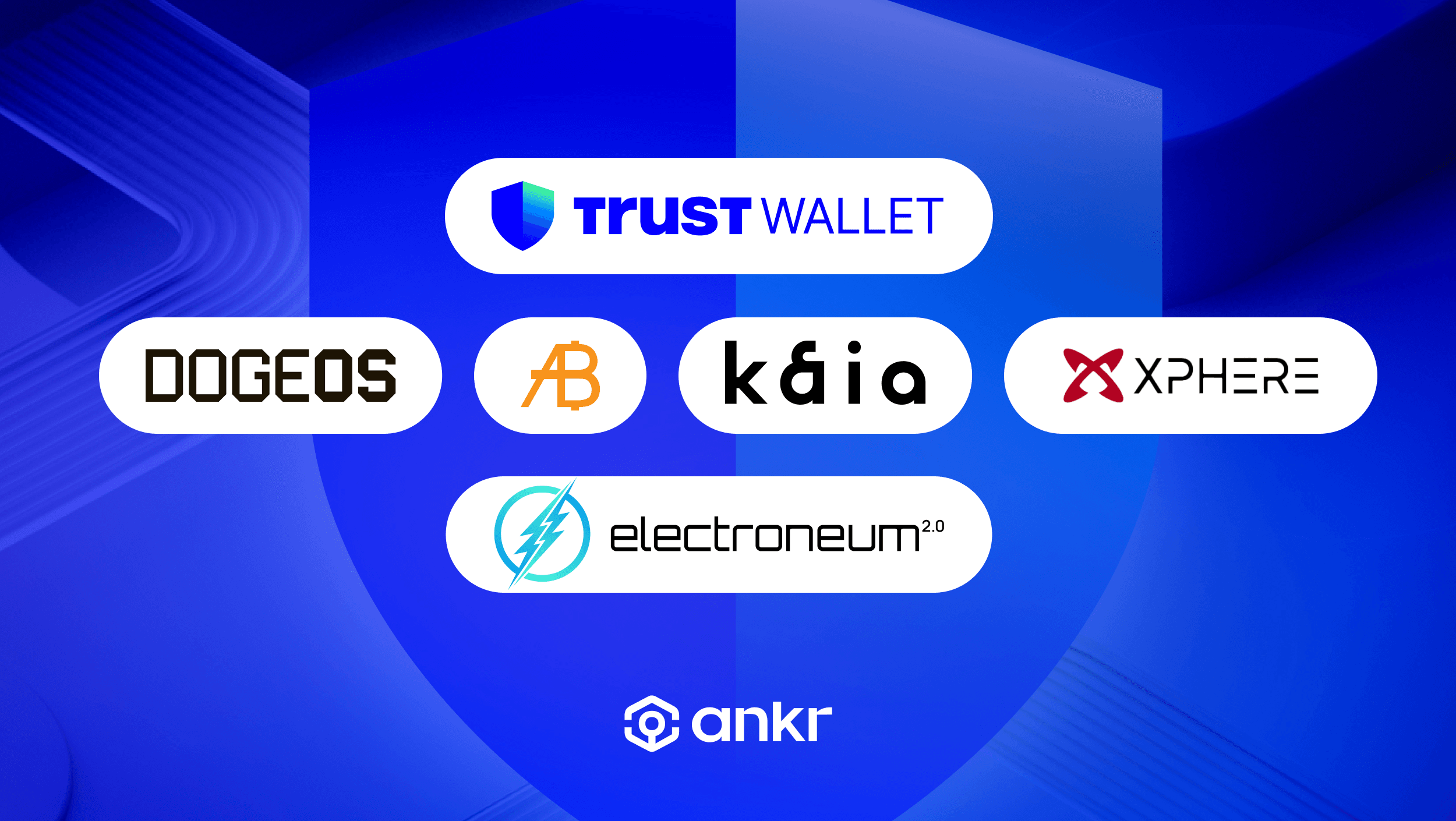
Ankr powers Trust Wallet's RPC infrastructure, handling over 1 billion requests a month across the chains Trust Wallet's users actually rely on. Tron included.
Tron's volume and usage patterns demand infrastructure built for it, not bolted onto something generic. Ankr's distributed node network, plus operational experience across 100+ chains, is what makes reliable Tron infrastructure possible at enterprise scale. Trust Wallet's users transact on Tron every day. The infrastructure holds up because Ankr built it to hold up.
Beyond Tron: The Chains Everyone Else Skipped
Trust Wallet is the most visible example of something you'll find across Ankr's entire client base: a willingness to support chains other providers passed on.
- Kaia is a public blockchain built for mass adoption in Asia, with deep ties into the Kakao and LINE ecosystems. Ankr runs the enterprise mRPC infrastructure behind it.
- AB Foundation runs a live public RPC endpoint at rpc-AB.com, powered entirely by Ankr. Every developer building on AB hits Ankr's nodes to do it.
- DogeOS brings smart contracts and a full developer platform to Dogecoin. Ankr provides its mRPC infrastructure at up to 1 million API calls a day.
- Electroneum is a mobile-first proof-of-work chain built for real-world payments. It needs bare metal infrastructure, not the virtualized cloud stack most providers lean on. Ankr built for that requirement instead of skipping it.
- Xphere is a dual-chain proof-of-work network governed by its validator Union. Ankr runs both the RPC infrastructure and a validator node here, with Union membership and voting rights. That's a direct stake in where the network goes next.
Why This Matters for Enterprise and dApp Teams
The pattern holds across every one of these: chains with active users and real transaction volume that most providers decided weren't worth the effort.
If you're an enterprise client or a dApp team operating across multiple chains, especially ones outside the mainstream, the gap between what a provider says they support and what they actually support well is exactly where things break.
Ankr's bare metal infrastructure, distributed node network, and track record across 100+ chains is what makes that breadth real. Not a marketing number. A pattern of saying yes when everyone else says no.
If your chain isn't on everyone else's list, it's on ours.
Join the Conversation on Ankr’s Channels!
X | Telegram | Substack | Discord | YouTube | LinkedIn | Reddit
Similar articles.
100 Million Reasons to Switch to Ankr Enterprise
June 18, 2026
Every new Ankr Enterprise client can now get started with 100 million free API requests. These aren’t credits or a trial allowance that expires....
Blockchain Infrastructure/RPC Providers Compared in 2026
July 10, 2026
Anyone evaluating an RPC provider eventually runs into the same set of comparison articles, most of which rank Alchemy, QuickNode, Infura, Chainstack, Tatum, and Ankr...